How the hybrid VLA pipeline beats Claude latency
Claude takes 2–10 s to respond — way over the 60 fps frame budget. We decouple acting from reasoning:
input    ────●─────────────────────────────────────────────────────────
preflight ──[▮]→ 1 ms → arm starts moving
Claude    ──[████████████████████████]──◉ 9.4 s (returns, compares)
arm       ──[████████████████████████████████████████ ─→  (12 s+ of motion)

         0      2      4      6      8     10     12     t (s)
To the audience: instant response with intelligent refinement, even though Claude is genuinely slow. The parse_thread generation counter prevents stale workers from clobbering fresher commands.
The physics got real — v0.2.0
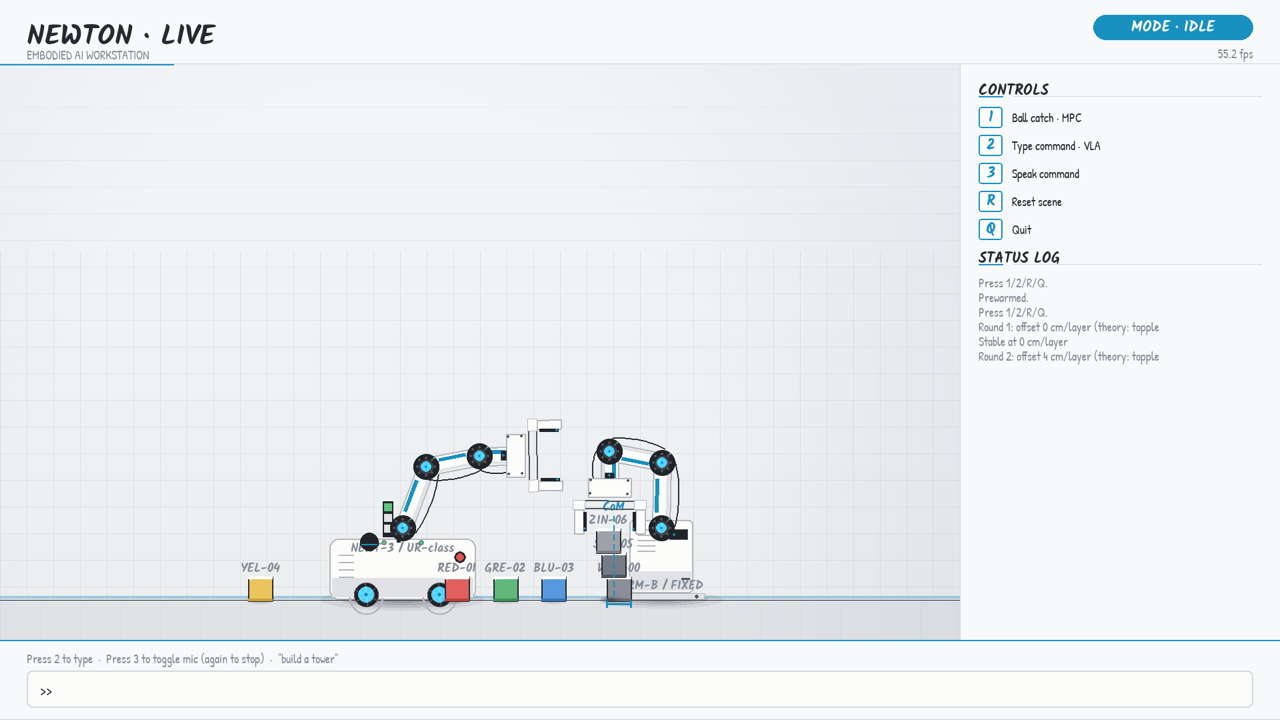
With --real-blocks the colored blocks become genuine Newton rigid bodies
that stack, topple and collide. Grasping is a KINEMATIC toggle — XPBD has no weld
constraints — so a held block's pose is prescribed from the gripper each frame and
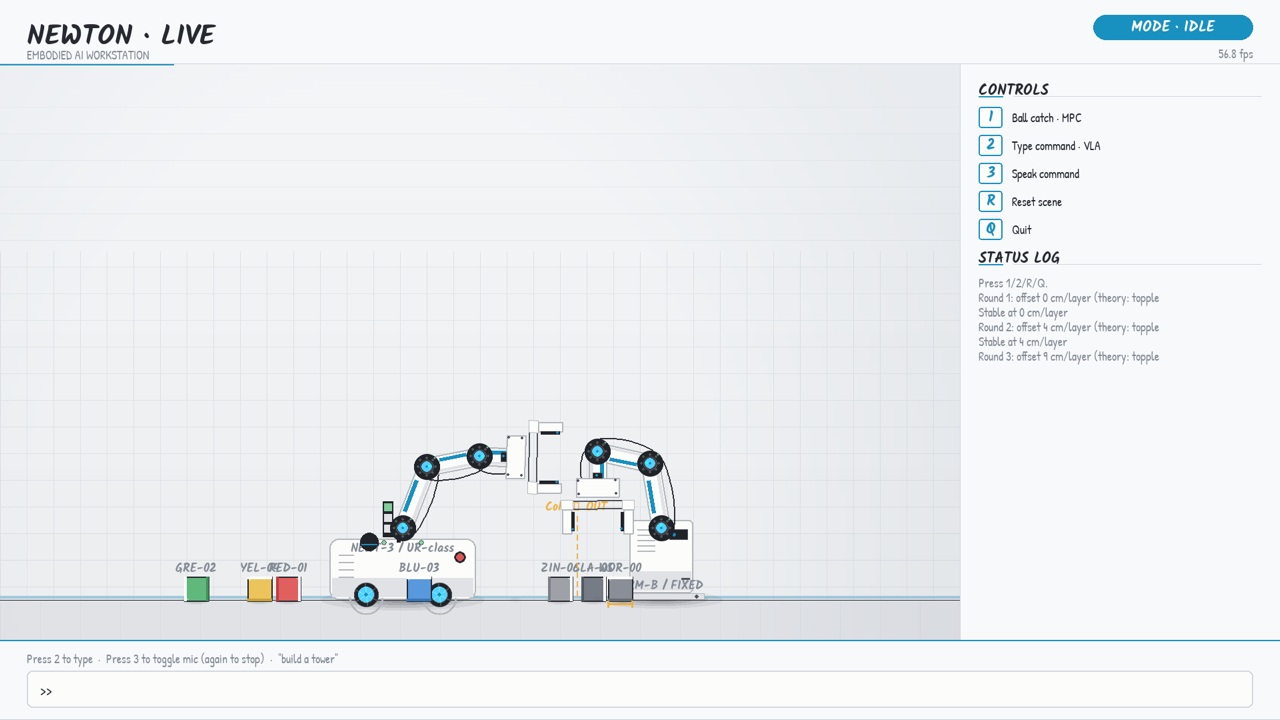
flipped back to DYNAMIC on release. The flagship use: Arm B's offset-tower stability
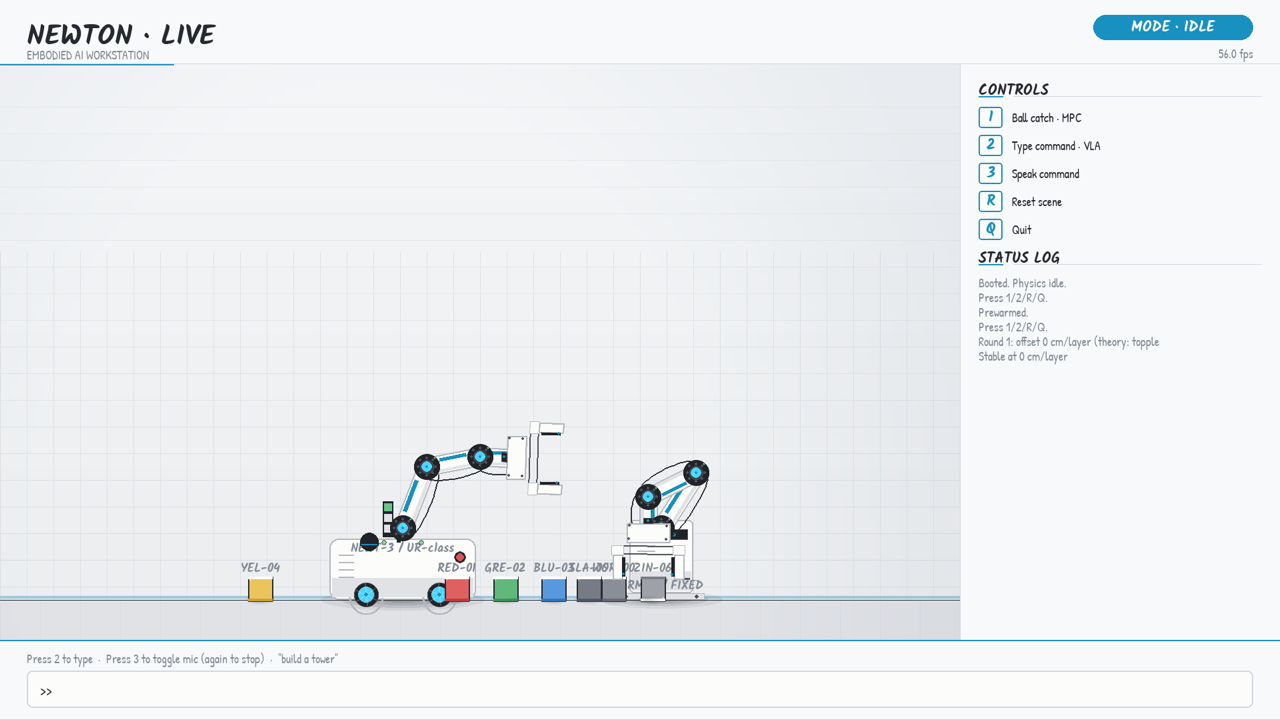
lecture (make experiment). Each round it stacks its three grey workpieces
with a growing per-layer offset, and the solver — not a script — delivers the verdict.
With 10 cm-half-width cubes, theory says the tower must fall beyond
d = 6.7 cm:
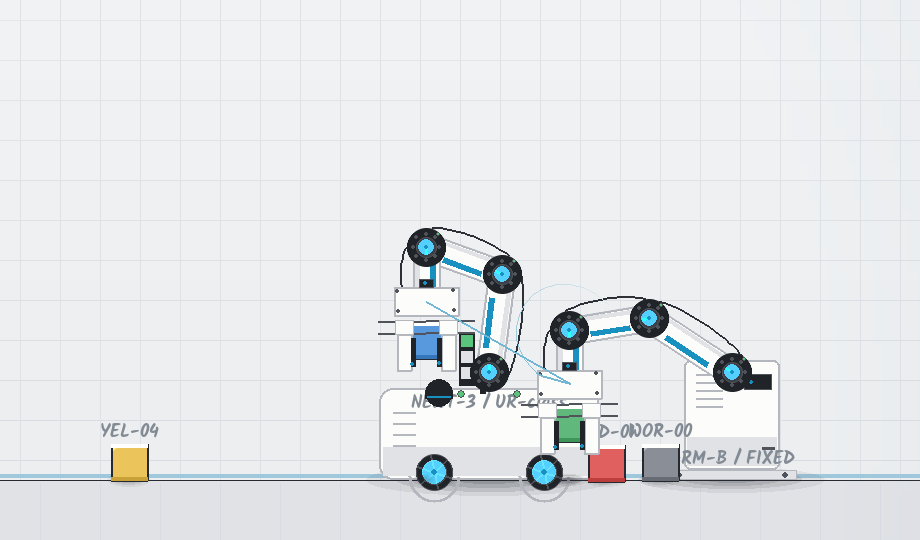
make collab
Two-arm tower relay
Whenever the stage is idle, Arm A fetches blocks to a handoff slot and Arm B
stacks them into a tower; roles reverse for teardown, then it loops.
The relay yields instantly to any audience input — it's the screensaver
that happens to be a robot collaboration.